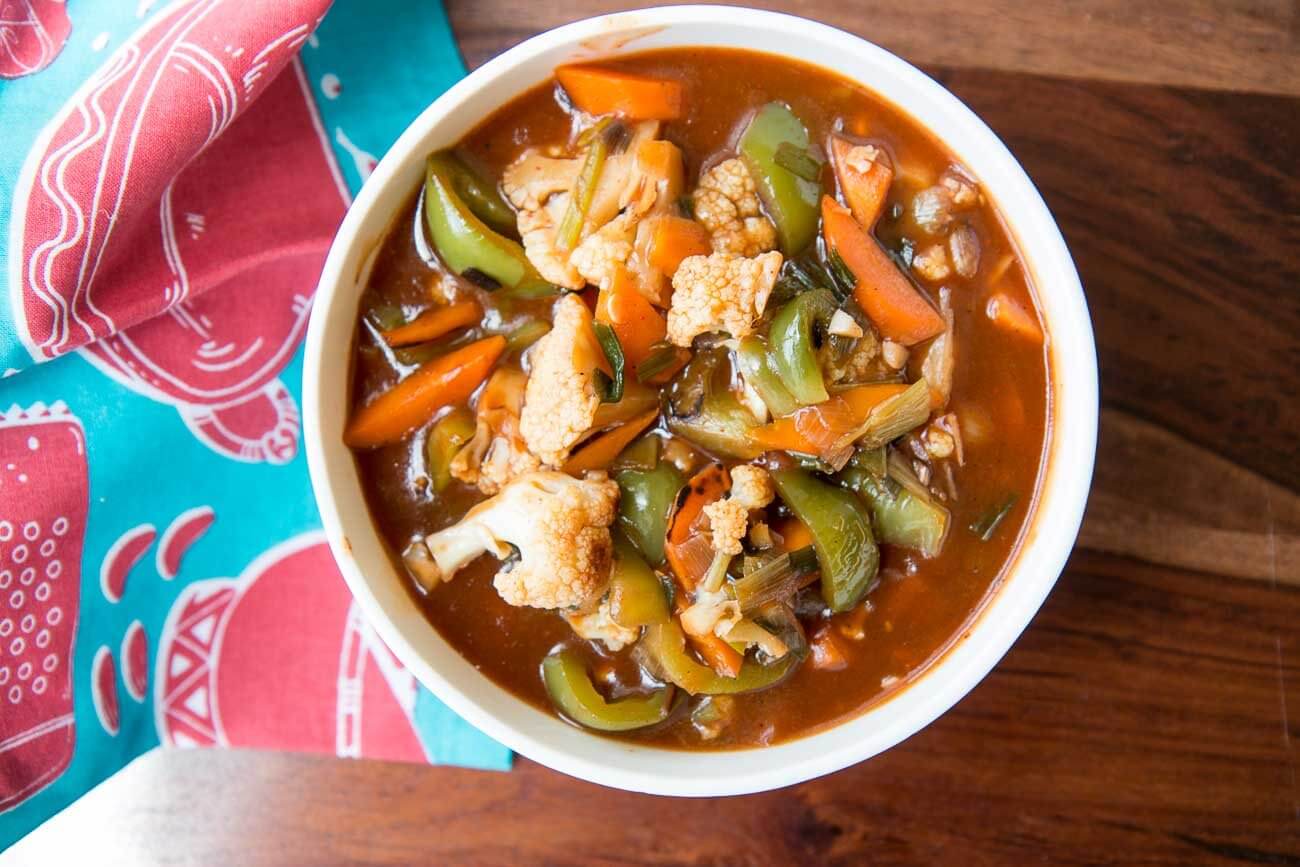
Szechuan Vegetables Recipe

Today, I’m excited to share a recipe close to my heart – Szechuan Vegetables. This dish is a symphony of bold, spicy flavors and crisp, colorful vegetables inspired by the rich culinary traditions of Szechuan cuisine.

Restaurant-Style-Schezwan-Vegetables

Growing up, I developed a taste and likeness for spicy food and was always fascinated by the complex and fiery flavors of Szechuan dishes. The combination of the tongue-tingling Szechuan peppercorns, dried chilies, and soy sauce creates a truly unforgettable taste experience.

There’s something incredibly satisfying about recreating restaurant-quality dishes in the comfort of your own home, and that’s exactly how I felt the first time I made Szechuan Vegetables. It was a chilly evening, and I was craving something warm and spicy to fend off the cold. So, I decided to try my hand at making Szechuan Vegetables from scratch, and I was thrilled with the result. 

Each bite was a burst of flavor – the perfect balance of heat, umami, and crunch. The dish satisfied my craving and filled me with a sense of accomplishment. Recreating this beloved Szechuan classic at home allowed me to appreciate the depth of its flavors and the joy of cooking from scratch.

So, whether you’re a fan of spicy food or just looking to try something new, Szechuan Vegetables are a perfect choice. I hope this recipe brings the same warmth and satisfaction to your kitchen as mine. So, grab your wok, and let’s dive into this spicy, savory adventure. I promise your taste buds are in for a treat! Happy cooking!

Equipments Required

  • A Deep Skillet: I prefer a deep skillet for stir-frying. Its deep, sloping sides make it easy to toss and stir the veggies without making a mess, ensuring everything cooks evenly.
  • Sharp Knives: I suggest using a sharp knife for chopping vegetables. I love how effortlessly it slices through bell peppers, broccoli, and baby corn, making prep work a breeze.
  • Cutting Board: A sturdy cutting board is essential for all that chopping. It provides a stable surface, and I like to use a large one to keep all my ingredients organized.
  • Measuring Spoons and Cups: I recommend using measuring cups and spoons for precise measurements.
  • Mixing Bowls: I use a couple of bowls to hold my prepped veggies and mix the sauce ingredients. It keeps everything tidy and ready to go when it’s time to cook.
  • Wooden Spoon or Spatula: A wooden spoon or spatula is my favorite tool for stirring.  
Homemade-Schezwan-Vegetables

Preparation and Cooking Time

Preparation Time Cooking Time Total Time
5 Minutes15 Minutes20 Minutes

How To Make Szechuan Vegetables At Home

Schezwan-Vegetables-Step-1
Schezwan-Vegetables-Step-2
Schezwan-Vegetables-Step-3
Schezwan-Vegetables-Step-4
Schezwan-Vegetables-Step-5
Schezwan-Vegetables-Step-6
Schezwan-Vegetables-Step-7
Schezwan-Vegetables-Step-8
Schezwan-Vegetables-Step-9
Schezwan-Vegetables-Step-10
Schezwan-Vegetables-Step-11
Schezwan-Vegetables-Step-12
Schezwan-Vegetables-Step-13
Schezwan-Vegetables-Step-14
Schezwan-Vegetables-Step-15
Schezwan-Vegetables-Step-16

Expert Tips That I Recommend

  • Protein Addition: Sometimes, I add tofu, tempeh, or seitan for a protein boost. I sauté them separately until crispy before adding them to the vegetables.
  • Nutty Crunch: I like to top the dish with toasted sesame seeds or chopped peanuts for added texture and flavor.
  • Aromatic Oils: I use a few drops of toasted sesame oil at the end of cooking for a deeper sesame flavor.
  • Extra Flavor Boosters: Sometimes, I add a splash of hoisin sauce or oyster sauce (for non-vegetarians) to deepen the umami flavor.
  • Citrus Zing: I finish the dish with a squeeze of fresh lime or lemon juice for a bright, zesty note.
  • Oven-Roasted Vegetables: Instead of stir-frying, I sometimes roast the vegetables in the oven. I toss them with oil and roast them at 425°F (220°C) until tender and slightly caramelized. Then, I toss them in the Szechuan sauce.
  • Toasting Spices for Enhanced Flavor: I toast spices in a dry wok over medium heat, stirring frequently to release their essential oils and boost their flavor. When the spices darken and become fragrant, I add oil and proceed with my recipe. This technique sharpens and deepens the spices’ flavor, giving my dish an extra boost.

FAQs About Szechuan Vegetables

Nutritional Information Per Serving

Szechuan Vegetables are a healthy dish, especially if you use minimal oil and control the amount of salt and sugar in the sauce. It is nutritious when made with lots of fresh vegetables and can be a part of your regular diet. 

Here, I have mentioned the nutritional breakdown of the recipe for you:

Calories64 kcal
Carbohydrates5 g
Protein0.1 g
Fat5 g
Saturated Fat1 g
Polyunsaturated Fat2 g
Monounsaturated Fat2 g
Sodium88 mg
Potassium77 mg
Fiber0.1 g
Sugar5 g
Vitamin A49 IU
Calcium12 mg
Iron0.3 mg

Szechuan Vegetables are a versatile dish that caters to various dietary preferences. It’s suitable for vegetarian, vegan, gluten-free, dairy-free, and nut-free diets, making it a great option for many.

However, those on low-sodium, low-carb, keto, or paleo diets may need to modify the recipe as it is not suitable for them. With little modification, this dish can be enjoyed by all.

Chinese-Style-Schezwan-Vegetables-(full-while-background)

Recipe Variations For Different Diets

  • Low-Carb/Keto Diet: I replace high-carb vegetables like carrots and corn with low-carb options like zucchini, spinach, or cabbage for a keto diet. I substitute zucchini noodles or cauliflower rice for any starchy components.
  • Paleo Diet: For a paleo diet, I use coconut aminos instead of soy sauce and avoid any processed sauces with non-paleo ingredients.
  • High-Protein Diet: For a protein boost, I suggest adding tofu, tempeh, or seitan. Sauté the protein separately until crispy, then add it to the vegetables and sauce towards the end of cooking.
  • Gluten-Free Diet: I suggest using gluten-free soy sauce (tamari) to check that all other gluten-free ingredients are gluten-free.

Storing And Reheating This Recipe

Storing

  • Refrigeration: I suggest allowing the Szechuan Veggies to cool to room temperature before storing them. This helps prevent condensation, which can make the vegetables soggy. Then, transfer the cooled veggies to an airtight container. This will help keep them fresh and prevent them from absorbing other odors in the refrigerator. Szechuan Veggies can be stored in the fridge for up to 4 days.
  • Freezing: If you want to store the Szechuan vegetables for a longer period, you can freeze them. I recommend placing them in a freezer-safe container or a resealable freezer bag. Frozen Szechuan veggies can be stored for up to 2 months.

Reheating

  • Stovetop: This is my preferred method for reheating. Heat a skillet or wok over medium heat. Add a small amount of oil or a splash of water to prevent sticking.  Add the Szechuan veggies to the skillet and stir occasionally until they are heated through. This should take about 5-7 minutes.
  • Microwave: This is the quickest method. Sometimes, I reheat my Szechuan veggies in the microwave, too. I place the Szechuan Veggies in a microwave-safe dish and cover the dish with a microwave-safe lid or a damp paper towel to retain moisture. I keep the heat high for 1-2 minutes, stirring halfway through. I continue heating in 30-second intervals if needed until the veggies are hot.
  • Oven: You can also reheat your Szechuan veggies in the oven. This method works well if you’re reheating a large batch. I recommend preheating the oven to 350°F (175°C) and spreading the Szechuan Veggies in an even layer on a baking sheet. Cover with aluminum foil to prevent drying out—heat for about 10-15 minutes, stirring once halfway through, until heated through.

What To Serve With This Recipe

  • Over Rice: I love serving these vegetables on a bed of Spanish Rice, Which is a comforting and classic combination.
  • As a Side, I often pair the vegetables with a simple protein like Grilled Chicken or Tofu. It makes for a balanced and flavorful meal.
  • In Wraps: Using the vegetables as a filling for Lettuce Wraps or Tortillas is a fun, hands-on way to enjoy them. It’s perfect for a casual meal.
  • With a Side of Soup: I enjoy complementing the dish with a Light Miso or Hot and Sour Soup. It’s a great way to create an authentic, Asian-inspired meal experience.
  • On a Salad: Adding the vegetables to a Crisp Salad with a tangy Vinaigrette is a fresh and crunchy option I love. It’s a great way to mix things up.

Printable Version

Szechuan Vegetables Recipe

Author : Anchra Sharma
Serving : 3
Calories : 64 kcal
Total time : 30 minutes
Szechuan Vegetables are stir-fried vegetables cooked with a blend of sauces and spices. This delicious vegetarian dish is prepared in no time. Refer to our recipe guide to make the best Szechuan vegetable recipe.
5 from 3 votes
LEAVE REVIEW »

Ingredients

  • 1 Tablespoon Sesame Oil
  • 3 Tablespoons Organic Maple Syrup
  • 1 Tablespoon Rice Vinegar
  • 1 Tablespoon Balsamic Vinegar
  • 2 Teaspoons Molasses
  • 1 to 3 Teaspoons Chili Garlic Sauce
  • ½ Teaspoon Ground Mustard Powder
  • 1 Teaspoon Fresh Minced Ginger
  • 2 Teaspoons Minced Garlic
  • ¼ Teaspoon Dried Red Pepper Flakes
  • ½ Teaspoons Cornstarch
  • 1 Cup Of Mixed Veggies

Equipment

  • Deep Skillet
  • Sharp Knives
  • Cutting Board
  • Measuring Spoons and Cups
  • Mixing Bowls
  • Wooden Spoon or Spatula

Instructions
 

  • Heat a deep skillet over medium-high heat and add a generous amount of sesame oil.
    Schezwan-Vegetables-Step-1
  • Once the oil is hot, add the finely chopped ginger and garlic
    Schezwan-Vegetables-Step-2
  • Sauté until golden brown and fragrant, and then add chopped onion to the skillet
    Schezwan-Vegetables-Step-3
  • Cook until they become translucent and slightly caramelized, and then stir in the chili garlic sauce, soy sauce, and ground mustard powder.
    Schezwan-Vegetables-Step-4
  • Mix well to combine the flavors, and then add balsamic vinegar, rice vinegar, and maple syrup to the skillet.
    Schezwan-Vegetables-Step-5
  • Then stir in molasses and chili flakes, ensuring everything is well incorporated.
    Schezwan-Vegetables-Step-6
  • Dissolve the ½ teaspoon of cornstarch in a small amount of water, then add it to the skillet.
    Schezwan-Vegetables-Step-7
  • Cook on low heat, stirring constantly until the sauce thickens.
    Schezwan-Vegetables-Step-8
  • Now add some mushrooms and bell peppers to the sauce
    Schezwan-Vegetables-Step-9
  • Then add beans and chopped carrots
    Schezwan-Vegetables-Step-10
  • Now stir in some baby corn and broccoli florets to the skillet
    Schezwan-Vegetables-Step-11
  • Mix the sauce and veggies well together and cook
    Schezwan-Vegetables-Step-12
  • Add a splash of water to the skillet to create a bit of steam, and let it cook for a few minutes until the vegetables are tender but still crisp.
    Schezwan-Vegetables-Step-13
  • Let it cook for a few minutes.
    Schezwan-Vegetables-Step-14
  • Add a bit more cornstarch dissolved in water to thicken the sauce further. Cook for an additional few minutes.
    Schezwan-Vegetables-Step-15
  • Remove the vegetables from the heat once they are cooked to your desired doneness. Garnish with chopped spring onions or any other toppings of your choice. Serve hot.
    Schezwan-Vegetables-Step-16

Video

Notes

  • Protein Addition: Sometimes, I add tofu, tempeh, or seitan for a protein boost. I sauté them separately until crispy before adding them to the vegetables.
  • Nutty Crunch: I like to top the dish with toasted sesame seeds or chopped peanuts for added texture and flavor.
  • Aromatic Oils: I use a few drops of toasted sesame oil at the end of cooking for a deeper sesame flavor.
  • Extra Flavor Boosters: Sometimes, I add a splash of hoisin sauce or oyster sauce (for non-vegetarians) to deepen the umami flavor.
  • Citrus Zing: I finish the dish with a squeeze of fresh lime or lemon juice for a bright, zesty note.
  • Oven-Roasted Vegetables: Instead of stir-frying, I sometimes roast the vegetables in the oven. I toss them with oil and roast them at 425°F (220°C) until tender and slightly caramelized. Then, I toss them in the Szechuan sauce.
  • Toasting Spices for Enhanced Flavor: I toast spices in a dry wok over medium heat, stirring frequently to release their essential oils and boost their flavor. When the spices darken and become fragrant, I add oil and proceed with my recipe. This technique sharpens and deepens the spices’ flavor, giving my dish an extra boost.
Prep Time : 10 minutes
Cook Time : 20 minutes
Total Time : 30 minutes
Cuisine : Chinese
Course : Main Course

Nutrition

Serving : 50grams  |  Calories : 64kcal  |  Carbohydrates : 5g  |  Protein : 0.1g  |  Fat : 5g  |  Saturated Fat : 1g  |  Polyunsaturated Fat : 2g  |  Monounsaturated Fat : 2g  |  Sodium : 88mg  |  Potassium : 77mg  |  Fiber : 0.1g  |  Sugar : 5g  |  Vitamin A : 49IU  |  Calcium : 12mg  |  Iron : 0.3mg

More Lunch And Dinner Recipes That You Can Try

Conclusion

Szechuan Vegetables are a flavorful and versatile dish that brings the bold, spicy flavors of Sichuan cuisine to your table. I absolutely love making Szechuan Vegetables because they fit so well into a variety of meals and dietary preferences. 

Whether I serve it over steamed rice, toss it with noodles, or wrap it in lettuce leaves, this recipe never fails to bring a burst of spicy, savory goodness to the table. Plus, with all the tips and variations, I can easily adapt it to suit different tastes and dietary needs. This recipe will impress whether you’re making it for a quick weeknight dinner or a special occasion. 

Feel free to experiment with different vegetables and sauces to make these Szechuan veggies your own. I hope you enjoy making and eating them as much as I do. Don’t forget to share your creations with me—I’d love to see how you make them your own. Enjoy the vibrant flavors and happy cooking!

5 from 3 votes (3 ratings without comment)

Leave a Comment

Your email address will not be published. Required fields are marked *

Recipe Rating